
GEO
How to Get Your Brand Featured in ChatGPT | GEO Guide
 ChatGPT
In the digital world, the way customers research brands, products, and services is changing. Potential customers are no longer relying solely on Google searches; they are also turning to AI platforms like ChatGPT for direct recommendations, comparisons, and insights that support their purchasing decisions.
For example, when someone asks, “What are the best digital marketing agencies in Türkiye?” or “Which companies stand out among industrial chemical manufacturers?”, they may expect AI to recommend specific brands.
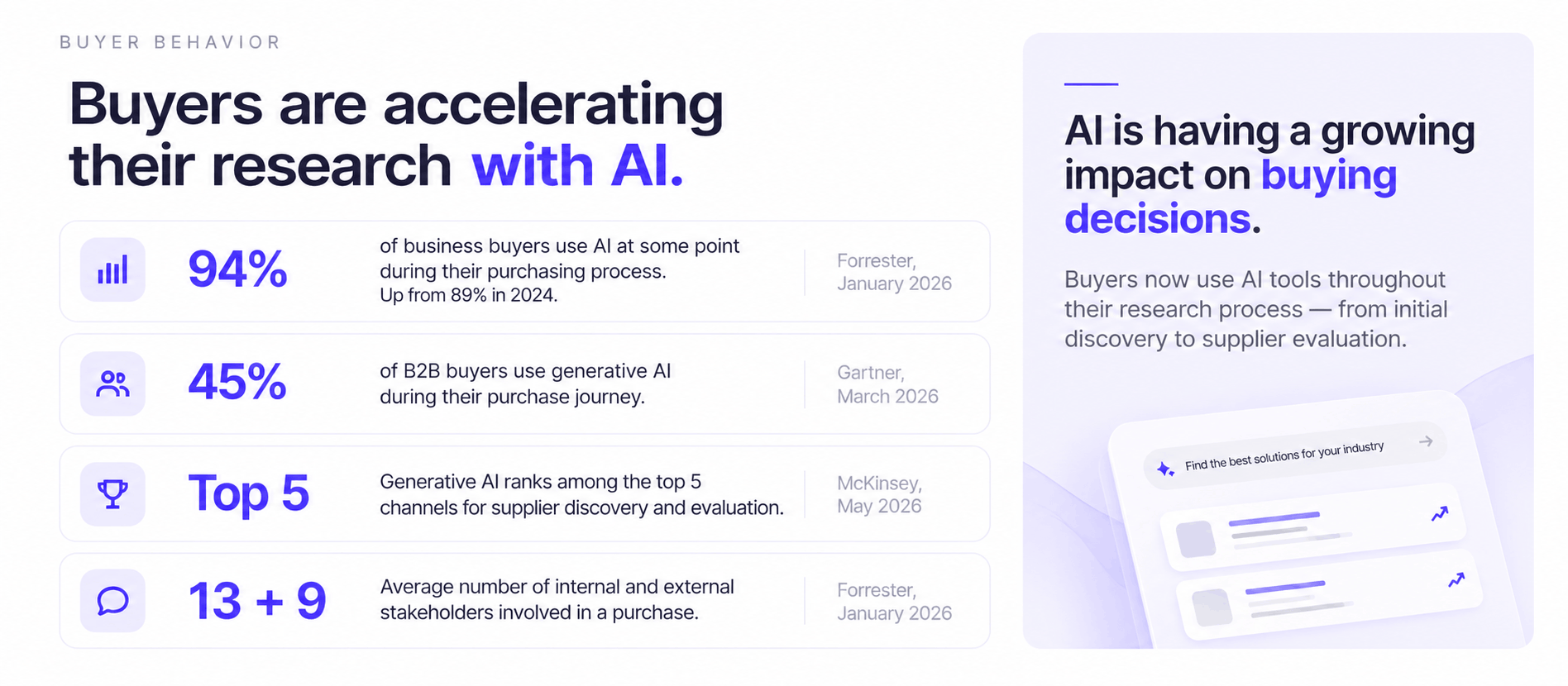
But how does ChatGPT decide which brands to include in its recommendations? And how can you increase the likelihood of your brand appearing in these responses?
The answers lie in Generative Engine Optimization (GEO), an increasingly important field of digital marketing.
How Does ChatGPT Recommend Brands?
ChatGPT is an AI system that evaluates users' questions and generates relevant, helpful responses. When up-to-date information is needed, it can search the web, draw on different sources, and include links to relevant websites in its answers.
For example, users may ask questions such as:
Which agencies provide B2B lead generation services in Türkiye?
Which digital marketing companies operate in Izmir?
Which reliable Turkish companies specialize in industrial manufacturing?
Which companies offer AI-powered sales automation services?
Which brands provide sustainable packaging solutions?
ChatGPT's responses to these queries may vary depending on the context of the question, available information, sources used, and search conditions.
Therefore, simply having a website may not be enough for your brand.
Your digital presence should clearly communicate what your brand does, which areas it specializes in, and who it serves.
What Is GEO and How Is It Related to ChatGPT Visibility?
GEO (Generative Engine Optimization) is an optimization approach designed to make brands' content and digital assets more discoverable and understandable within AI-powered search experiences.
Traditional SEO primarily focuses on improving a website's organic visibility in search engine results.
GEO expands this approach by focusing on how brands are associated with AI-generated responses.
For example, an industrial manufacturer may aim to appear in Google searches for “polyurethane raw material manufacturers,” while its GEO strategy may also target natural-language queries such as “Which companies can supply polyurethane raw materials in Türkiye?”
There is an important distinction here: GEO does not guarantee that your brand will be recommended by ChatGPT. Instead, it aims to improve your brand's potential to be discovered in relevant searches by strengthening technical accessibility, content quality, and digital authority.
7 Steps to Increase Your Brand's Visibility in ChatGPT
1. Analyze Your Brand's Current ChatGPT Visibility
Before starting optimization efforts, you need to understand your brand's current position.
To do this, identify the questions your potential customers might ask on AI platforms.
For example, a B2B technology company could evaluate queries such as:
Which manufacturing automation companies operate in Türkiye?
Which companies offer production tracking software for factories?
Which companies should be considered when choosing MES software?
Which brands provide industrial digital transformation solutions in Türkiye?
You can examine whether your brand is mentioned in these queries, which competitors are recommended, and which websites are cited as sources.
Rather than conducting this analysis only once, comparing the same queries at regular intervals can provide more meaningful insights.
You can perform this technical analysis for free here.
2. Make Sure Your Website Is Accessible to AI Search Systems
One of the fundamental requirements for visibility in ChatGPT is ensuring that your website is accessible to relevant search systems.
OpenAI recommends allowing its crawler, OAI-SearchBot, to access website content so that it can be discovered in ChatGPT search results.
Therefore, you should review the following aspects of your website's technical infrastructure:
Crawler access permissions in the robots.txt file
Page indexability and accessibility
XML sitemap and internal linking
Access restrictions caused by servers and firewalls
Page titles, descriptions, and content hierarchy
An important point: Making your website crawlable does not guarantee that ChatGPT will recommend your brand. However, accessibility issues may make it more difficult for your content to be discovered.
3. Make Your Service and Product Pages Clear and Understandable
For AI systems to access accurate information about your brand, your product and service descriptions need to be clear.
For example, instead of simply stating, “We provide innovative solutions for businesses,” explain which products you develop, which industries you serve, and which customer needs you address.
A well-structured service page should answer the following questions:
What is this service? Who is it for? What problems does it solve? How is it implemented? What features differentiate it from competing solutions?
This approach helps visitors better understand your brand and may also make it easier for your content to be associated with relevant user questions.
4. Create Content That Answers Your Customers' Real Questions
Traditional keyword research remains important in GEO strategies. However, instead of focusing only on short keywords, you should also address the detailed questions users ask in natural language.
For example, rather than targeting only the keyword “B2B sales automation,” you can create content that answers questions such as:
How does B2B sales automation work?
How can AI be used to find potential customers?
How can customer acquisition through LinkedIn be improved?
What are the benefits of using an AI Sales Assistant for sales teams?
Guides, comparisons, and explanatory content addressing these questions can make your brand's expertise more understandable in relevant subject areas.
The goal is not simply to produce more content, but to provide the information your target audience genuinely needs during its research process.
5. Share Real Case Studies and Verifiable Data
One of the most effective ways for a brand to demonstrate its expertise is by presenting concrete examples of completed projects.
For example, there is a significant difference between a digital marketing agency simply stating, “We provide SEO services,” and explaining how it improved organic visibility through a specific client project.
Case studies can present the project's initial situation, the strategy implemented, the work carried out, and the measurable results achieved.
However, all data should be accurate, verifiable, and presented in the appropriate context.
Such content can strengthen potential customers' trust and provide more comprehensive information about your brand's areas of expertise.
6. Strengthen Your Brand's Digital Authority
GEO is not limited to improvements made directly to your website.
Building a presence in industry publications, expert articles, reputable platforms, and relevant digital sources can also help establish a stronger digital footprint.
For example, a technology company can strengthen its digital authority by:
Sharing expert insights in industry publications
Publishing original articles on technology and business platforms
Turning real customer projects into case studies
Creating comprehensive technical content about its products and services
Maintaining consistent corporate information across digital platforms
The primary objective is not to manipulate AI systems, but to present your brand's expertise in a trustworthy and verifiable way across the digital ecosystem.
7. Measure Your ChatGPT Visibility Regularly
Producing content alone is not enough for GEO. You also need to evaluate the impact of your optimization efforts regularly.
You can do this by monitoring your brand's visibility across a predefined set of target queries.
Key performance indicators include:
Brand Mention Rate: The percentage of tested queries in which your brand appears in the generated response.
Competitor Visibility: Which competitors are mentioned more frequently across the same queries.
Source Citations: Which responses cite your website as a source.
Newly Gained Query Visibility: Questions where your brand was absent in previous measurements but appears in subsequent evaluations.
ChatGPT Referral Traffic: Website visits originating from ChatGPT.
Because ChatGPT responses may change over time and under different conditions, these metrics should be interpreted as periodic visibility indicators rather than absolute rankings.
Is SEO Enough to Appear in ChatGPT?
SEO and GEO are not alternatives to one another.
SEO focuses on improving your website's technical infrastructure, content quality, organic search visibility, and user experience.
GEO additionally examines how your brand is associated with AI-generated responses.
Therefore, a strong SEO foundation can support GEO efforts. However, ranking highly on Google does not mean ChatGPT will recommend your brand for every relevant query.
Similarly, being occasionally recommended by ChatGPT does not necessarily indicate strong or sustainable organic search performance.
The most effective approach is to treat SEO and GEO as complementary components of an integrated digital visibility strategy.
How Long Does It Take to Improve Brand Visibility in ChatGPT?
There is no single answer that applies to every brand.
Your website's current technical condition, content coverage, industry competition, digital authority, and target queries can all influence the results.
For example, resolving technical accessibility issues may be completed relatively quickly, while comprehensive content development, building brand visibility across independent sources, and evaluating results may require more time.
For this reason, GEO should be approached as an ongoing process of analysis and optimization rather than a one-time adjustment.
Improve Your AI Search Visibility with Nera Innovations
Do you know how your brand is positioned when potential customers research your industry on platforms such as ChatGPT, Gemini, and Perplexity?
At Nera Innovations, our AI Search Visibility & GEO service helps brands adapt to this evolving search experience.
We manage the process through four key phases.
1. AI Search Visibility Analysis
We analyze queries relevant to your target audience across ChatGPT, Gemini, and Perplexity, evaluating existing brand mentions, source citations, and competitor visibility.
2. Technical Infrastructure & Data Optimization
We improve your website's crawlability, technical SEO infrastructure, structured data, and content architecture to make your brand's digital information more accessible and understandable.
3. Content & Digital Authority Development
We create content addressing the questions your target audience asks throughout its research and purchasing journey, while optimizing existing product and service pages according to GEO and SEO principles.
4. Performance Measurement & Continuous Improvement
We regularly evaluate brand visibility and competitor positioning across selected target queries, using the findings to continuously refine our optimization strategy.
Our goal is not simply to increase the number of times your brand is mentioned in AI-generated responses. It is to improve your brand's potential to be discovered by the right audience and associated with the right products and services.
How Visible Is Your Brand in AI Search?
Discover our GEO solutions to understand your brand's current position across ChatGPT and other AI platforms, compare your visibility with competitors, and identify opportunities for improvement.
Discover Your AI Search Visibility
Conclusion: Prepare Today for the Future of Search
As the way customers access information changes, brands must also evolve their digital visibility strategies.
AI platforms such as ChatGPT are becoming additional information sources that users can consider when researching products and services.
This shift represents more than a new marketing channel. It also creates an opportunity for brands to reconsider how they are described and which topics they are associated with across the digital landscape.
A strong technical foundation, high-quality content that answers user questions, verifiable expertise, and regular performance analysis form the basis of an effective GEO strategy.
Because the future of digital visibility is not just about appearing in search results, but also about being accurately associated with the answers your customers are looking for.


